Why Roddy?
Biographer Samuel Garza Bernstein tells us how he became the first writer to honestly--and beautifully--reveal Roddy McDowall in full.

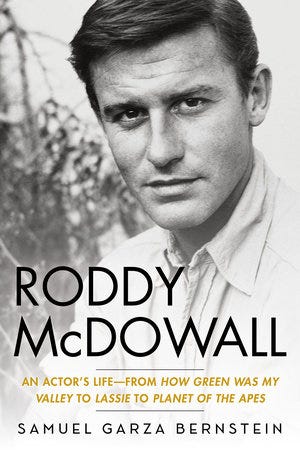
When you write a biography it’s natural and logical for people to wonder why you chose that particular person. There are a number of ways to answer the question, some prosaic and process-oriented, some personal and emotional, some even spiritual or metaphysical. I’ll answer all three ways and start by going back a few years.
It’s April 2, 2022. I get a message on social media from someone named Lee Sobel. “Hi Samuel, I am an admirer of your book Mr. Confidential. Are you planning to write more books? Do you have a literary agent? I have sold 23 books in the past 15 months, and I am looking to sell even more haha. Happy to speak with you if you are interested—thank you.”
I think it’s probably a scam, so I don’t answer. Also, I’m busy writing for television and theater, and I haven’t done a book in 12 years. Getting back into books isn’t on my radar. But three days later I come across the message again. I google Lee, and a whole bunch of articles appear about upcoming books. Many are books I’m interested in reading. Or, given the chance, books I’d be interested in writing…
So we meet virtually. Lee is enthusiastic and passionate. He has a bunch of ideas about potential projects, but we keep coming back to Joan Crawford. Does the world really need another book about Joan Crawford? To me, the interesting thing is to look at her work, at her impact on American ideas about women, and to remember how important she was in ways that have nothing whatsoever to do with wire hangers. I write a two-page treatment. Over the years I’ve written hundreds of treatments that led to nothing, and I have little expectation that this one will go anywhere.
But within two days we have two offers.
I’m shocked. Amazed. We say yes to one and Lee asks if I have any other ideas we can pitch to the publisher we’re turning down. I don’t. Lee suggests Cesar Romero. I write a two-page pitch. A day later we sell the second book.
This is literally two weeks after receiving that first message from a stranger. And now I have two books to write… My husband and I are also in the middle of contemplating a huge move to Portugal. Writing books fits within this new paradigm for our lives. So far, so good. I have other work to finish. I co-EP the third season of a tv show called “After Forever,” shooting in New York; I direct the stage musical adaptation of my book Mr. Confidential in Indiana; I get to work on Joan. About six months into the process, Lee asks if I’ve ever thought about Roddy McDowall. No. But I’m surprised to learn there has never been a book about him, and I do a little research. Another two-page treatment. Another sale-- to an editor at Kensington who has always wanted to publish a book about Roddy and has been hoping to find the right writer with the right pitch.
That’s the prosaic and process-oriented answer to, “Why Roddy?” It’s the vaguely random result of different conversations and possibilities. I’m curious and open to other people’s ideas. I have an agent who is constantly listening and thinking. And I tend to say yes to things unless I have a compelling reason to say no.
The personal and emotional answer starts with an emerging throughline for these three subjects—Joan, Cesar, and Roddy—all people who work preternaturally hard and re-create themselves any number of times over their long careers. All are somewhat overshadowed by powerful pop cultural images: Mommie Dearest-cum-Mildred Pierce; The Joker; and with Roddy, you have Lassie, Flicka, Planet of the Apes, and Elizabeth Taylor all slightly obscuring the view. All have powerful connections to the LGBTQIA+ community. And for Cesar and Roddy, both were gay men who lived surprisingly authentic lives in a time when being open about homosexuality was relatively unknown.
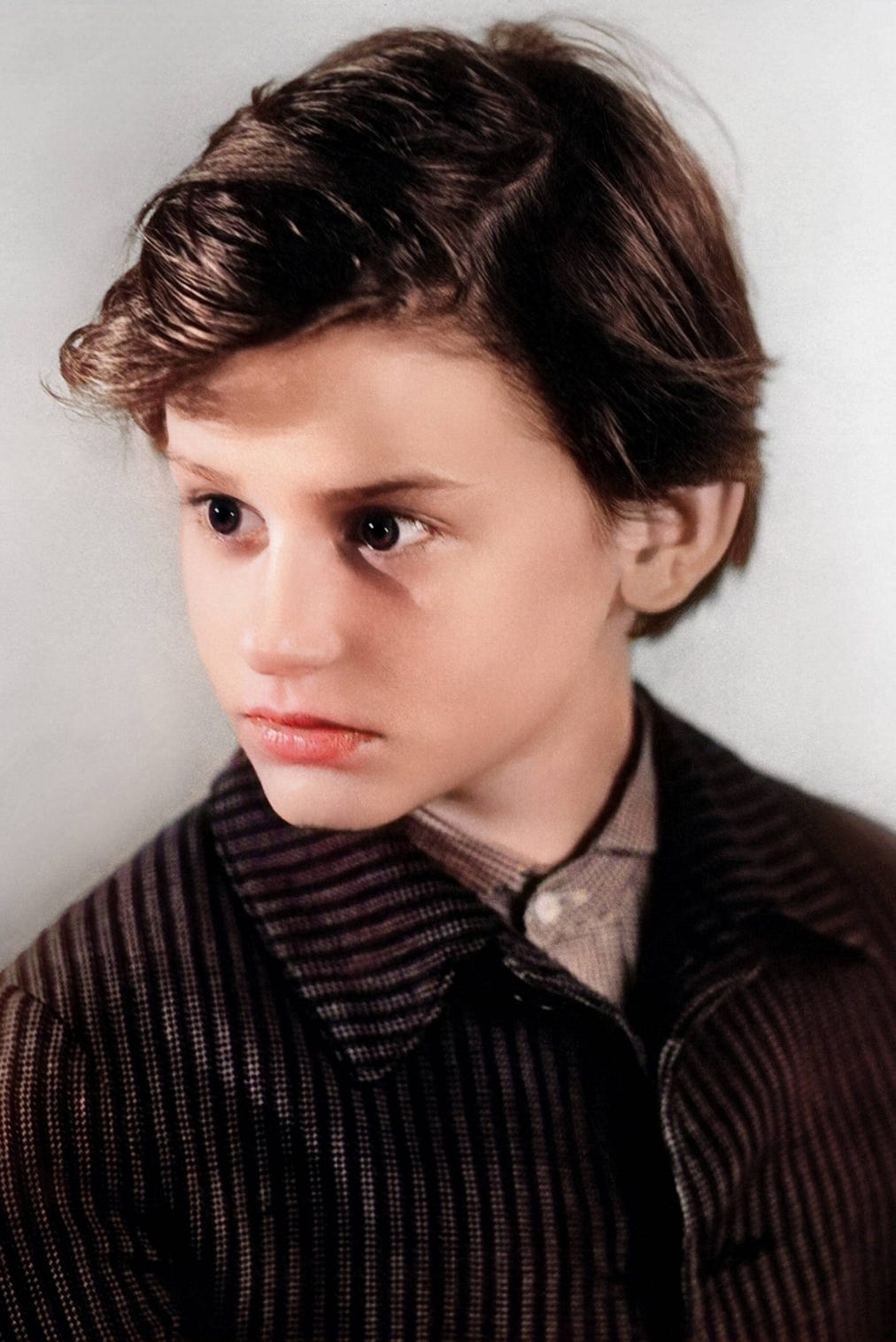
But there’s something even more personal about Roddy for me. I think back to being a kid watching television. Roddy is one of the first people on screen that shows me an adult future to which I aspire. I identify with all those millions of guest-starring roles he does on television in the 1970s and 1980s—men who are cultured, witty, a little effete, but still very sexual. I don’t want to grow up to be like Charles Nelson Reilly or Paul Lynde. I want to be like Roddy.
Why wouldn’t I grab the chance to write about him? Especially when I learn there are extensive archives—hundreds of boxes of his correspondence, script notes, photos, and cards from the 1930s through to the 1990s at Boston University. A treasure trove.
And it feels totally correct. No book has been written about Roddy McDowall yet? Well, now there is. I’m righting a wrong.
This leads me to the spiritual, metaphysical answer to, “Why Roddy?”
If there’s an afterlife, it’s entirely possible Roddy McDowall hates the fact that I’m writing this book. He always said he would never write one. But why save all your letters and commit them to a university archive if you don’t want someone to one day read them and write about you? Maybe he doesn’t hate the idea of a book about him after all.
Maybe he actually loves it. I have a fantastical, if potentially embarrassing, reason for believing that such a possibility exists—a reason that might be completely bogus, a heady vote of confidence, or open me up to accusations of being a somewhat less than serious biographer.
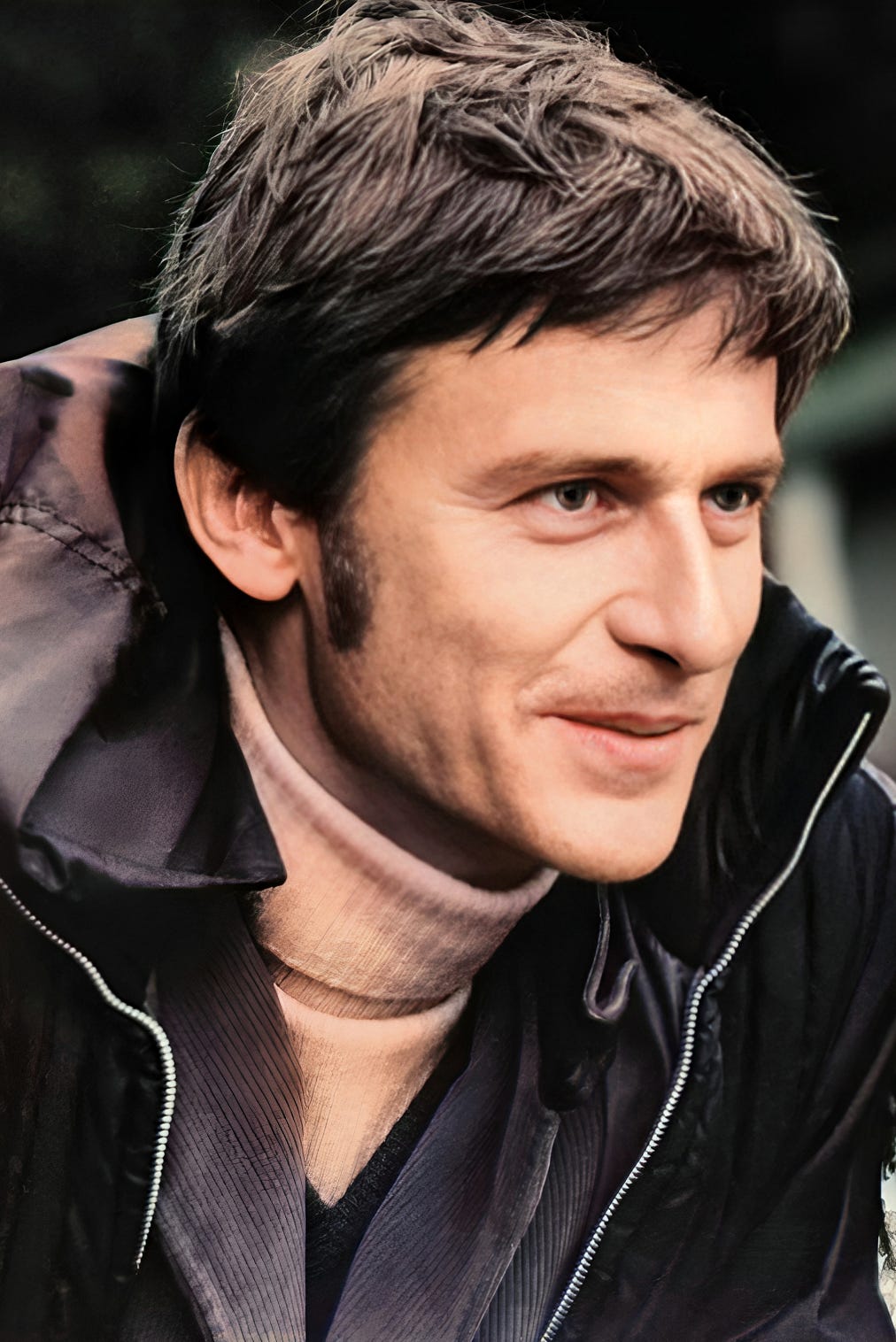
I work on many projects at the same time, juggling different worlds and different lives, some real, some fictional. For a few months, in the middle of my Roddy research, my attention needs to turn back to Cesar. A Portuguese spiritualist I happen to know named José Pedras asks me out of the blue if Roddy McDowall smoked and whether he wore scarves.
For most of his life, Roddy smokes like a fiend (he dies in 1998 of metastatic lung cancer) and he amasses an enviable collection of Hermès scarves.
“Oh. Then, I think he was in my bedroom last night,” José says, as if he’s telling me the correct time or whether it will rain. He’s not in the business of talking to the dead but, since childhood, he says, they come to him occasionally when they want to communicate. He drops another casual bombshell: Roddy wants to talk to me.
Perhaps José is in touch with dead people; perhaps he isn’t. How the hell do I know? But I figure, what have I got to lose? On a couple of nights that feel weirdly unspooky—not like séances, but like after-dinner chats—José says Roddy wants me to know that he has been waiting rather impatiently for someone to tell his story. Tired of waiting, he chose me for the task. “But with due respect and appreciation for the glorious Mr. Romero, perhaps it’s time to return to my story?”
I really don’t know what to think about this turn of events. I don’t seriously propose that this book is the idea of and has a posthumous seal of approval from Roddy McDowall himself. That would be a batshit crazy and unbelievably self-serving thing to claim. (Even though I sort of believe it.) But I rely on no information coming from these events.
Extensive interviews and research are the basis for this book. But I can say for sure that having these two non-séances is a fever dream worthy of a 1940s fan magazine. The idea fits right in with the circus of show business—the field of endeavor that shapes, defines, and fills much of Roddy’s life.
So:
1. I’m writing about Roddy because of a number of professional conversations among writer, agent, and publisher.
2. I’m writing about Roddy because I want to be him when I grow up.
3. I’m writing about Roddy because he picked me from beyond the grave.
All are true, even if I can’t prove the last one.