The Gay Decades
Out of the closet and into the living room: nine episodes in the most dramatic cultural assimilation of our time

By Frank Rich
For Esquire, November 1987
Like every middle-class American kid at college, I was convinced I knew everything—particularly about sex, the first order of business of any boy after his escape from home. On a night in the late 1960s—fall of freshman year at a not-yet-coeducational school—I went off with some of my roommates to put this knowledge into practice. We had conceived an elaborate, foolproof plan to meet the voluptuous yet brilliant girls of our dreams at a nearby mixer and bring them back to our rooms in time to defy the still stringent parietal regulations. Then—in terminology that said everything about the sexual ethos of the time—we would “score.”
One of the five boys who shared our dormitory suite refused to come along. John (as I’ll call him) had a girlfriend back home in Iowa to whom he had sworn to be faithful. Besides, he explained, he had a friend from Yale, Mark, who was dropping by for a beer. Poor John, we thought, as we greedily charged off to the mixer. We quickly forgot about him as we spent four hours watching our grand plans dissipate in a humbling round robin of awkward conversations, instant rejections and boozy, fumbling forays onto a crowded dance floor.
When we returned to the dorm empty-handed at midnight, we entered our shared living room in darkness and immediately stumbled on sprawled bodies scattered about the communal couch. A light snapped on, and there was John, dressed but bleary-eyed, his expression and tie just slightly askew. He introduced us to Mark, and to Nick, and to Rob. Nick and Rob, he said—John, curiously, did all the talking for the group—were friends of Mark’s from Yale. He hoped we didn’t mind if they crashed in the living room for this one night.
We didn’t mind, quite. But the next morning, as John’s guests left, we were struck again by their sheepish silence, their vague connection to our roommate, their docile manners: they seemed nothing like John, who was just like us, which is to say, he was an outgoing, personable, and all-around terrific guy, even if he was so stupid as to pledge fidelity to his high-school steady. As the months passed, however, and as these boys (and others of equally circumspect behavior) visited with more and more regularity, we began to realize that they and John shared some bond that was beyond our comprehension. John and his friends were always quiet, polite, preppily dressed. But they looked guilty when we happened in on them, day or night, like raucous grade-school students who had suddenly quieted down when their temporarily absent teacher returned to the classroom. We were smart, my roommates and I, but it took us a year to figure out that John and his friends were homosexual—perhaps not even engaging in homosexual acts when we encountered them, perhaps only talking about whatever homosexuals talked about. It took only a month after that, with the aid of a sympathetic proctor, to alter our living arrangements so that we (and John) wouldn’t have to endure the embarrassing, silent collisions anymore. John never did confide in us about his sexuality—semesters later, his girlfriend back home still surfaced in passing conversations—and we never asked him about it. Such was the way of the world as I and, I suspect, many others knew it in 1967.
Two decades later, I needn’t say that we live in a different place entirely. Homosexuality is not merely an everyday topic of conversation; on some days since the discovery of AIDS, many Americans seem to make it the only topic of conversation. But if AIDS has heightened straight America’s perception of gay America in a new, urgent, and selfish way, the truth is that the two societies had started to meld into one long before we started worrying about the extent to which we shared bodily fluids. The story of American life over the past two decades is often, for better and for worse, the story of the homosexualization of America. What seemed so mysterious and covert on that night when I first sensed that John and his friends were following an indecipherable code is now visible, and, if not universally tolerated, then taken for granted. The word homosexual no longer causes our society’s leaders, whether politicians or movie stars or news anchormen, to lower their voices as if they were discussing a death in the family. The gay and the straight have become so wedded that it’s often impossible to figure out which is which. Most people now know that the pretty male waiter wearing earrings may not be gay, while the nice man in pinstripes at the bank could be. Although the percentage of the population that is homosexual presumably remains constant, the permeation of what were once considered exclusively homosexual attitudes into our society has increased exponentially.
Mass culture is the arena where such social changes are frequently played out in American life. If Elizabeth Taylor and Dan Rather aren’t afraid to talk about homosexuals—and Michael Jackson isn’t afraid to create an effeminate persona—then we’re not afraid, either. American pop culture, which never takes one eye off the box office, is cautious: it often mirrors or follows or panders to the tyrannical views of the majority instead of shaping or leading them. But if one wanted to see how the gay merged with the straight in two short decades to produce the helter-skelter environment we live in now, pop culture and its disseminators, the print and electronic media, would be as good a place as any to chart the changes as they happened. To look back over the past two decades is to see how one year’s seemingly peripheral gay cultural occasion could grow into a phenomenon that would later remake the heterosexual world.
1. 1968: The Boys in the Band
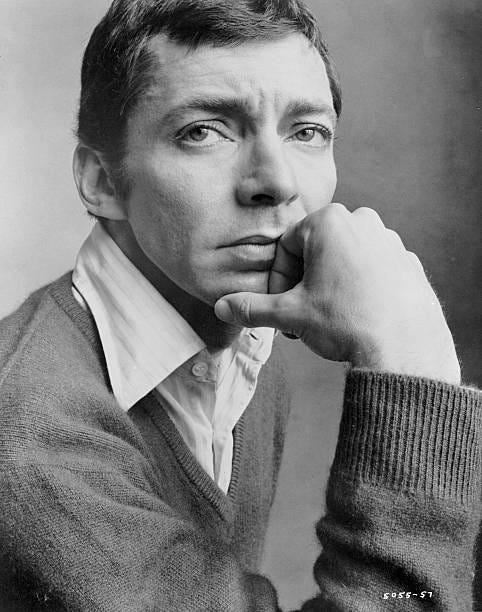
This was certainly the case with The Boys in the Band, an off-Broadway play that was the must-see, impossible-to-get-into theater event of the spring of my freshman year. At Theatre Four, a small playhouse near Tenth Avenue, itself reeking of the secret and contraband, I joined an audience of straight sophisticates—the same crowd at any New York hit, but now terribly confused about dress code—and laughed nervously at Mart Crowley’s comedy, which appeared to be the definitive insider’s tour of my former roommate John’s closet.
Although The Boys in the Band, which would soon be distributed by Hollywood to a more general public in William Friedkin’s faithful film version, was hardly the first mainstream portrayal of homosexuality, it was the first to clear the air by revealing exactly (if discreetly) what these consenting adult men did in the shadowy privacy of their own homes. These activities included dancing in couples to Burt Bacharach’s “The Look of Love,” oral sex, using hair spray, making self-deprecating wisecracks (“Well, one thing you can say for masturbation—you certainly don’t have to look your best”), worrying obsessively about the wrinkles and receding hairlines of middle age, and flaming on about the likes of Judy Garland, Bette Davis, Gloria Swanson, and Billy de Wolfe.
Like any heterosexual in the audience, I could rest self-contentedly assured that I was much better off. The “boys” who gathered for a birthday party in a Greenwich Village townhouse were mostly miserable: a guilt-stricken Catholic, perpetually lonely and in hock for all the elegant Hermès sweaters stuffed into his bedroom’s chic pine armoire; a once-married teacher with a flagrantly promiscuous lover; an Uncle Tom salesman treated as a “boy” in more than one demeaning way; and the party’s guest of honor, a self-described “thirty-two-year-old-ugly-pockmarked Jew fairy,” whose birthday brought only paid-for pleasure—the gift of a twenty-dollar-per-night hustler dressed up as a midnight cowboy.
Crowley’s scariest comic creation was the hustler’s donor: the limp-wristed and purse-lipped Emory, an antiques dealer who was played by Cliff Gorman and who referred to everyone by the lispy, all-purpose appellation “Mary.” “I’d make somebody a good wife,” he said, but his only sexual encounters were with anonymous bathhouse “tricks” who left him prey to vice squads or hepatitis. The characterization of Emory was so hideously hermaphroditic that the playwright felt compelled to protect its onstage interpreter’s future career by pledging to the interviewer Rex Reed that “Cliff Gorman, who plays the effeminate fairy, is happily married.”
With its cross section of stereotypes draped in maudlin self-pity, The Boys in the Band seemed to plead the case for its pathetic misfits. “It’s not always like it happens in plays—not all faggots bump themselves off at the end of the story,” claimed the hero. Yet Crowley’s script still ended with the promised, if not literal, self-destruction of its homosexuals. In the final moments, a putatively well-adjusted character broke down in sobs of self-hatred to announce, “You show me a happy homosexual, and I’ll show you a gay corpse.”
Amen. At the time, this was the message we fully expected to receive about the tea-and-sympathy crowd, however less closeted and more “shocking” the vehicle of its presentation. You didn’t want to believe that these men might actually be living out the much-promised (but rarely delivered) Hugh Hefner fantasy of unlimited sex without monogamous attachments. And so the movie confirmed our suspicion that homosexuals were doomed to barren emotional lives—whether they were as “nellie” as Emory or as butch as the teacher (seen playing basketball during the opening credits). The film also reassured us that the boys were safely quarantined in their Village ghetto (with summers on Fire Island, where they taught one another their conga-line dance routines). Though made during the explosion of the antiwar, civil rights, and feminist movements, The Boys in the Band contained not a single reference to 1960s America beyond its characters’ closets: the men were too busy sadistically humiliating one another to think of challenging the heterosexual community most of them still apparently aspired to join.
Mart Crowley did play a historic role. In 1966, The New York Times drama critic, Stanley Kauffmann, had famously baited “three of the most successful American playwrights of the last twenty years” for disguising “homosexual quarrels” as “marital quarrels,” with a concomitant “viciousness toward women.” Only two seasons later, The Boys in the Band answered Kauffmann’s complaint; a playwright had finally refrained from inventing what the critic had called “a two-sex version of the one-sex experience.” Yet the result showed up Kauffmann’s long-familiar thesis as a canard: if anything, Crowley’s effeminate men were treated far more viciously than Blanche DuBois in A Streetcar Named Desire, or Martha and Honey in Who’s Afraid of Virginia Woolf?, the 1962 Edward Albee play that influenced both Kauffmann’s essay and The Boys in the Band.
Crowley never had another theatrical success. Cliff Gorman survived his swishy embodiment of Emory to play straight rakes in comedies such as Paul Mazursky’s An Unmarried Woman and Neil Simon’s Chapter Two. It’s amazing to realize now that Emory’s outrageous behavior—off-putting to heterosexuals in the audience and some of his fellow homosexuals onstage—would soon become a marketable, mainstream pop style. While no one would have guessed so in 1968, it would soon be possible for a performer to have a big career in show business by embracing, rather than fleeing from, the flamboyant personality traits of the most androgynous boys in the band.
2. 1971: The Divine Miss M
For America to be made safe for androgyny, it had to be made safe for camp. “Camp is the triumph of the epicene style,” Susan Sontag wrote in her groundbreaking essay “Notes on ‘Camp’” in 1964. “Homosexuals, by and large, constitute the vanguard—and the most articulate audience—of Camp.” The heterosexual majority was aware of this phenomenon, if only from observing the audience at urban revival movie houses during certain double bills (Wild Strawberries and The Seventh Seal) or from attending Judy Garland’s ritualistic comeback concerts. (At one Garland performance I attended, near the sorry end of her life, the old Garland fans, retired couples, parted from the vociferous contingent of young male couples as completely as if Moses had parted the Red Sea.) A Ronald Firbank sensibility flowered, too, in the funny movies Paul Morrissey directed for Andy Warhol as the 1960s drew to a close—pictures such as Trash and Heat, which acted out what Sontag called camp’s “relish for the exaggeration of sexual characteristics and personality mannerisms” by celebrating the beefcake of Joe Dallesandro, the transvestism of Holly Woodlawn, the clichés of B-movie Hollywood. But half the time I couldn’t figure out who wanted to sleep with whom; the films’ sexual code was as arcane as the Maria Montez allusions in The Boys in the Band.
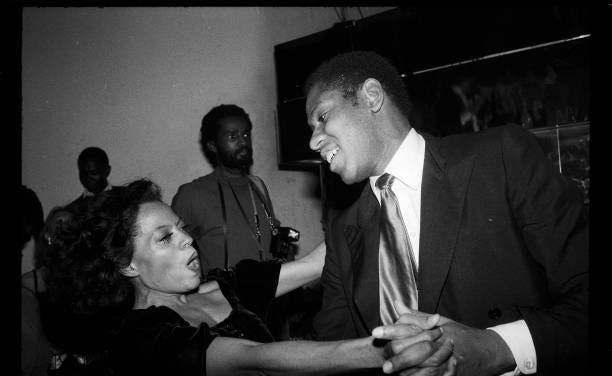
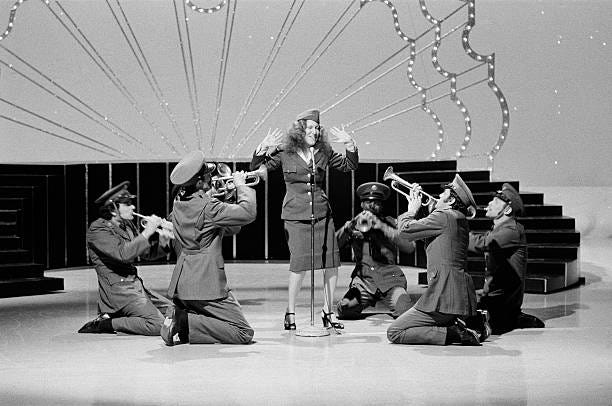
The phenomenon that finally made camp kosher was the most unlikely one imaginable—the rise to prominence of a cabaret singer performing in a gay bathhouse. Bette Midler, a onetime Broadway chorus actress, billed herself as “the Divine Miss M”—a campy Mae Westism—and identified herself as “the last of the real tacky ladies” and “everything you were afraid your little girl would grow up to be—and your little boy.” In other words, Midler advertised her female characteristics, starting with her overflowing breasts, in the exaggerated way a drag queen might. (“You’re gonna like this one ’cuz I shake my tits a lot!” she’d say, by way of introducing “Boogie Woogie Bugle Boy. “) She wielded the epithet “Bitch!” with eyelash-batting, limp-wristed abandon—a woman imitating a gay man imitating a woman. She was epicene in a cartoonish way, like Jack Benny, not in a threatening, predatory way, like Crowley’s Emory. “In the Mood,” a song that might have epitomized noxious homosexuality if sung by the boys in the band, became Top Forty pay dirt in the brassy delivery of Miss M and her backup singers, the Harlettes.
Aside from her considerable talent, what permitted Midler to move beyond her cult camp following to mass acceptance may have been her attitude of full disclosure: she let us in on the joke instead of making us the butt. The vengeful note of gay anger inherent in camp was further neutralized by the open-door policy of the venue where Midler appeared. “The Tubs,” as she called the Continental Baths (situated below the Ansonia Hotel in the West Seventies), was an undisguised pleasure dome for those who habituated it—slender young men wearing white towels while waiting to swim or to engage in some less visible activity. The Baths let in heterosexual couples on weekends—a brilliant stratagem assuring that a once subterranean environment would be conferred with cachet, not to mention media coverage, from New York’s opinion makers. One simply had to go there, and on the night I did, by which time only a Midler clone was offered for entertainment, the boys were the real main attraction: they didn’t bite, as I and my companion had feared in anticipation, but instead were an attractive advertisement for healthy, polite, and free sex. Their clinical sensual glow was alluring in the manner of early Scandinavian porno movies set in doctors’ offices—particularly if you didn’t try to imagine too explicitly what these men did in the areas off limits to those of us just there for the floor show. At the same time, I wondered what they thought about all these straight people—overdressed (we didn’t want to be mistaken for the regular clientele), staring and yet pretending not to—as we slummed in their private enclave. Maybe the homosexuals were better adjusted than we had thought, for they seemed to have nothing, anatomically or spiritually, to hide.
The proprietor of the Continental Baths exploited this line of reasoning, appearing on television to contrast the open, unhypocritical sexual activities at his establishment to the “dishonesty” of straight singles’ bars. In the context of the early 1970s sexual revolution, the gay bath was now a hip novelty, and its acceptability was enhanced by Midler’s stardom; her crossover appeal certified the cultural validity of a sexual ghetto much as Diana Ross’s had raised the white public’s consciousness of a racial ghetto. But unlike Ross, Midler didn’t change much as she expanded her audience. The performer one gets in Ruthless People is still identifiable as the Divine Miss M, yet fifteen years later no one finds it necessary to remark on the derivation of her divinity. Her latest fans, indeed, may not even know whence she came.
3. 1972: Ziggy Stardust
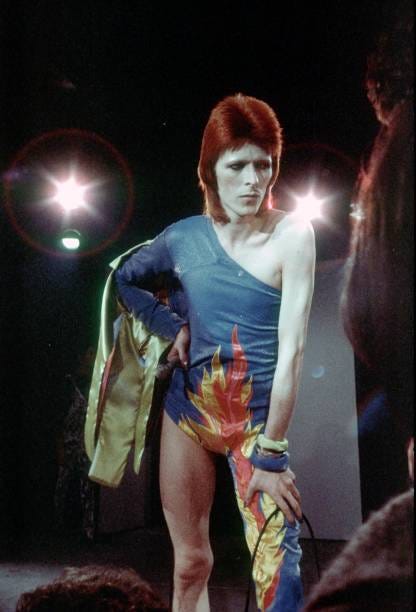
If Midler was for real—even her first name, an homage to camp icon Bette Davis, was given at birth—an element of calculation crept into the rock music world’s merchandising of androgyny. David Bowie, né David Jones, and Mick Jagger saw the commercial possibilities in unisexuality and remade themselves in that increasingly exploitable image.
The selling of androgyny could be seen in an embryonic but graphic form in Performance, a 1970 Jagger film vehicle co-directed by Nicholas Roeg (who would later provide a similar service for Bowie in The Man Who Fell to Earth, 1976). The opening credits teasingly featured copulating bodies in the back seat of a Rolls-Royce, but it was impossible to identify the gender of the entwined limbs. It was unsettling to feel aroused, with a sinking sensation that it might be the wrong kind of stimulus. The ensuing plot had to do with a gangster, played by James Fox, who went underground by renting a basement flat from Turner, a prematurely retired rock star and “confirmed bachelor” played by a garishly made-up Jagger. “Time for a change,” went the dialogue’s refrain. “Nothing’s true, everything’s permitted,” said Turner, with an especially fluttery wink. With the aid of playfully applied wigs, lipstick, and eyeliner, the macho Cockney gangster with overdeveloped pectorals gradually traded identities with the “male and female man” he had previously insulted as ‘‘degenerate” and “perverted.’’ The transformation was accompanied by Indian music and decor as well as the vaguely radical sloganeering—giving sanctification to gender-blurring by linking it to both the prevailing political Zeitgeist and Eastern head-shop spirituality. Cautiously enough, the film stopped short of depicting actual bisexuality: Fox’s final sexual partner was a freckle-faced, flat-chested woman—the figure of an English public school boy in the guise of an “underdeveloped” girl.
The very title of Performance, with its connotation of role playing, reveals the film as a put-on, camp with a hostile undertow. If androgyny could be turned into an experimental option—a flavor of the month, like each newly discovered hallucinogenic drug—it could be made palatable (and marketable) to a jaded youth culture running out of new thrills. The movie toyed seductively with our insecurities, implying that bisexuality was the new litmus test of hipness, for its own mercantile ends.
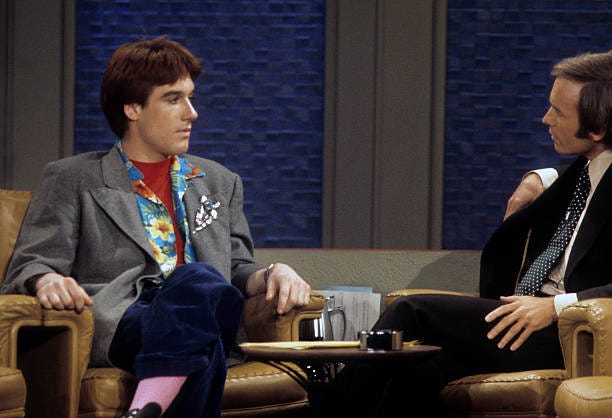
David Bowie’s performance alter ego, named Ziggy Stardust, took the Jagger technique of bisexual tantalization still further. Already celebrated for having been photographed wearing a dress, the singer now affected hot pants, dyed red hair, high boots, earrings—the full panoply of what would become the Glitter Rock movement. Bowie further crossed the line by claiming publicly to have met his wife “when we were both laying the same bloke”; he adopted the posture of a pederast when onstage with his lead guitarist, Mick Ronson. But was Bowie coming out of the closet, or merely playing the part of a bisexual coming out of the closet? He seemed a showman with a gimmick, like an updated Liberace and just about as sexless. The extravagant artifice of his caricatured androgyny was too overdone to be threateningly “homo”—it was designed to appeal (or, more accurately, to sell) to gays, straights, teenage boys and girls alike. As would become clear with Bowie’s ever blander peers and successors—Elton John, Alice Cooper, Boy George—androgyny could be rendered as perfunctory a costume-party fantasy for heterosexuals as dressing up like cowboys and cops could be for homosexuals. Johnny Carson and Ed McMahon talked to these men as if they weren’t any odder than Cher and the other loudly dressed women who paraded through their television living room. Androgyny became simply another style of dress, with its own hit theme songs (Lou Reed’s “Walk on the Wild Side”), a phase you could safely fool around with and then, like long hair or hashish, outgrow. Soon, utterly heterosexual shopping-mall teenagers were cross-dressing in emulation of Glitter Rock heroes, yet any observer could see that they behaved no differently than the malt-shop set of the grease era.
4. 1973: A Reclassification
The growing perception that homosexuality was benignly chic as a fashion, if not any heterosexual’s first choice as a way of life, was further accentuated by the American Psychiatric Association’s unexpected reversal of nearly a century’s worth of official practice. After years of acrimonious debate, its twenty thousand members voted a resolution declaring that homosexuality “does not meet the criteria for being a psychiatric disorder” and would no longer be labeled in itself “a sickness.”
The American household was, perhaps, a little ahead of the APA at this point. Only months before the psychiatrists’ belated reversal, a national television audience received its most sustained and forthright exposure yet to a gay character—and a truly flamboyant and sexual one, not the genteel father figures (played by Hal Holbrook and Martin Sheen) of the previous year’s ostensibly “daring” made-for-TV movie, That Certain Summer, and not a rock star done up in glitter for fashion or titillation’s sake. The young homosexual on national display was Lance Loud, twenty, the oldest child (of five) of William and Pat Loud, upper-middle-class parents from Santa Barbara, California, and voluntary stars of the marathon Public Broadcasting Service documentary, An American Family.
The series caused a stir, in part because the Louds would allow cinéma vérité practitioners to invade their privacy for hours of airtime, revealing the dreary secrets and betrayals that the proverbial Joneses usually keep locked behind closed doors. But however many arguments An American Family prompted about American dreams gone awry and filmmakers gone berserk, it was Lance who gripped the imagination. An Andy Warhol camp follower who had dyed his hair silver at age fourteen, later painted his lips David Bowie blue, and now lived in New York’s Chelsea Hotel (site of the echt Warhol film, The Chelsea Girls), Lance was a California suburban kid who really had become what Bette Midler called everything you were afraid your little boy would grow up to be. Yet Lance was too witty and attractive to be repellent: he epitomized the young homosexuals now beginning to come out of the closet—the wisecracking, benign, artistic types that men and women of my generation sought out, especially for party invitation lists. Nor did Lance’s mom, from all appearances a perfectly conventional hausfrau, seem afraid for her little boy whatsoever. “This world is good for him,” she told the camera, as Lance clowned around with hustlers and transvestites at the Chelsea. “He’s found himself.” Later, we saw Lance scrounging about in Paris, wearing gold lamé gloves, trying on his sisters’ makeup. He was refreshing after an overdose of his insensitive businessman father, whose masculine bravado eventually drove Mrs. Loud to seek a divorce on camera. Lance was not a fake like David Bowie but an accessible, ingratiating prime-time boy next door—Billy Gray or Jerry Mathers or David Cassidy.
To be sure, An American Family duly informed us that Lance had, as an adolescent, seen a psychiatrist once a week—not the sort of thing that ever happened on My Three Sons. But both Lance’s behavior and the APA’s announcement that homosexuality didn’t require “a cure” made it clear that being gay was no longer that much more aberrant than acting gay.
5. 1977: Studio 54
There had been hot discos for the hip and famous in the 1960s—Arthur, where Sybil Burton Christopher played den mother to what was still known as the jet set; Cheetah, the counterculture Roseland, where Hair first disrobed—but they were quintessentially straight institutions, enforcing a hierarchy familiar to the New York night crowd since the heyday of the Stork Club. If you were rich or famous or powerful or wellborn, you gained entry and a prime table. While the music was now rock and the old dress codes had collapsed, the rules of the game of status remained unchanged.
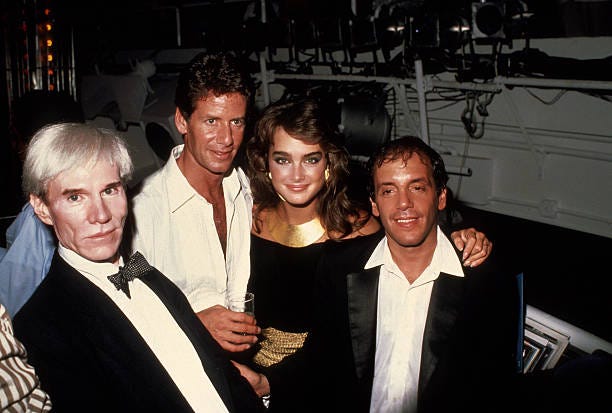
With the advent of Studio 54, a cavernous dance palace in the gay-porno-film neighborhood west of the Broadway theater district, a new pecking order was imposed and, with it, new fashions in music, dress, public behavior, and the wielding of power. Unlike its bathhouse-cabaret precursors—or the gay-ghetto discos of Fire Island or the Village, such as Les Mouches and Twelve West—Studio 54 was not conceived by Steve Rubell and his partner Ian Schrager as an exclusively homosexual establishment. But it would be used by an ever-more-assertive homosexual Establishment to bring would-be with-it heterosexuals at least figuratively to their knees.
While proclaimed “the world’s top celebrity disco” by that final arbiter of mass straight culture, People magazine, Studio 54 reeked of the animus of gay revenge that the Continental Baths and Bette Midler had managed to avoid. The tone was set outside, on the street, where Steve Rubell and various minions would survey the nightly crush to separate the admittees from the rejects. What were the criteria for entrance? Not always money or conventional pedigrees. Rubell tried to define his vague standards to the reporters who now waited for his every word: “We like some guys with guys because it makes the dance floor hot, you know? There are certain people who come that we know are good. But I’ll tell you something—I wouldn’t let my best friend in if he looked like an East Side singles guy.” Studio 54 discouraged “the bridge and tunnel crowd,” Rubell elaborated, because “they dance with partners [and] hold hands and stuff like that.”
Rubell was short and had a bridge-and-tunnel accent. Was his the revenge of the nerd? Watching him in action, one could imagine that he was getting back at the cool crowd of his own suburban high school—the handholding jocks and cheerleaders who might have tyrannically ruled his senior prom. Even if such deposed hetero royalty were somehow able to gain admittance to Studio 54—a feat requiring a shedding of Rolex watches and polyesters—they’d still get a share of comeuppance once inside. The blaring disco music was unsettlingly vague as to sexuality, inane in content, tranquilizingly repetitive in rhythm—an affront to high-minded rock ’n’ roll of the 1960s and to pop standards before that. It was music for bodies, not the brain or heart, and the bodies in view were principally male and well kept: languid-eyed models dancing together, still more men in satin gym shorts and tennis shoes waiting on tables. The celebrities in the crowd—Liza Minnelli, Andy Warhol, Bianca Jagger, David Bowie, Margaret Trudeau, Margaux Hemingway, designers such as Halston and Calvin Klein—had their own special corners and rooms, as forbidden to the hoi polloi as the gay discos and sex bars whose mystique Studio 54 popularized and cashed in on. To be there as a peon, as I was on a few occasions, was to feel that the Continental Baths crowd had finally turned nasty toward the intruding straights and was determined to make them pay (with overpriced drinks and condescending treatment). Even as everyone was telling you that this was where the action was, you felt that the real action, not all of it appetizing, was somewhere in the dark periphery, out of view—and kept there, to make you feel left out.
Whatever their actual sexuality, the stars who passed through Studio 54 achieved the ultimate status: they could emulate the gay night life, from its exclusivity to its democratically ambisexual dance-floor calisthenics to its ludicrously late hours (themselves a rebellion against the conventions of the “normal” workaday world). Rubell hooked his civilian heterosexual admittees by allowing them to become, for a night, vicarious members of a club that did not want them—and his chosen few were no doubt titillated by the disco’s aura of easy sex and drugs. While some straights could and did complain about the arrogant policies of Studio 54, most tried to accommodate themselves to the new order of cool that the disco imposed, much as they might put up with the insulting maître d’s at hot Manhattan restaurants. Capitulation to gay taste was, after all, the only sure way to get in.
6. 1978: The Times of Harvey Milk
Whatever it meant to homosexuals, most heterosexuals regarded the gay liberation movement as but a blip on the seismological chart of late-1960s political upheavals. Stonewall—the seminal 1969 political riot by homosexuals in response to a gratuitous police raid of Christopher Street’s Stonewall Inn—lacked the larger resonance (or publicity) that equivalent watersheds in other protest movements, such as Selma and Chicago, possessed. Gay Rights parades that followed in Stonewall’s wake were to be enjoyed as spicy local color on television news shows—as Ziggy Stardust revues with placards, perfect for leading into the weather—rather than as harbingers of a political movement gathering critical mass.
As pop culture was homosexualized, however, it was only logical that the political culture would follow suit. Someone had to try to grab votes and power from the new confusions. For many heterosexuals like myself (and maybe some homosexuals), it was Anita Bryant’s opposition to gay rights, rather than the gay rights advocates themselves, that proved to be the crucial factor in dramatizing the cause. Bryant was an entertainment industry nonentity whom no one I knew could place. Had she been a regular on The Arthur Godfrey Show? She might well have had Woody Allen’s Broadway Danny Rose for an agent and would certainly have had no easy time gaining admittance to Studio 54. Her main claim to fame was as a singing pitchwoman on television for Florida orange juice.
As would become even clearer in the subsequent presidential election, a second- or third-rate career in show business was by no means a bar to political leadership. Bryant’s “Save Our Children” campaign earned a lot of attention with such rhetoric as “God puts homosexuals in the same category as murderers’’ and “The will of the American people is to return this country to pro-family, Bible morality.” Bryant did do damage, prompting the repeal of antidiscrimination ordinances in Miami and elsewhere. But her movement was remarkably short-lived. “Anita Bryant is the best thing ever to happen to American homosexuals,” wrote The Nation, and who could dispute that assessment? An embarrassment to any heterosexual to the left of the Moral Majority and a spur to homosexual activism, Bryant was not shrewd or appealing enough to be the homophobic equivalent of demagogues like George Wallace or Huey Long. She preempted any effective antihomosexual politicians beyond the lunatic fringe and diminished the possibility that antigay hysteria would sweep the country. By 1978, only a year after Bryant’s first successful referendum campaigns, no less a family man than Ronald Reagan came out against the Briggs Amendment, a “Save Our Children”–inspired California ballot proposal that would have made homosexual expression grounds for dismissal of school teachers.
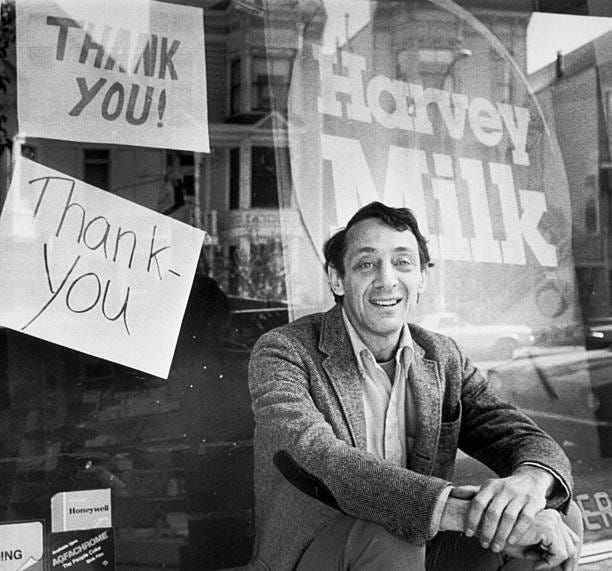
The Briggs Amendment lost, and that seemed a significant victory to a heterosexual whose civil rights marching days preceded the gay rights movement. The vigilantism of the Briggses and Bryants was a far less appealing prospect than the occasional gay teacher (and the Briggs opponents had gotten out the word that gays didn’t seduce children any more avidly than straights). A few weeks after the Briggs defeat, San Francisco’s first avowedly homosexual officeholder, Harvey Milk, was assassinated, along with the city’s mayor, George Moscone, by a reactionary former city official, Dan White, who later received a light sentence for his crime (and much later committed suicide). The idolatry Milk inspired was hard for an outsider to understand. Like such other San Francisco phenomena as the beats and Haight-Ashbury, Milk seemed an eccentric novelty—he needed time to travel beyond his constituency. He did so, albeit in death, eventually reaching people like me in the East as a posthumous national media favorite immortalized in dozens of print and television pieces, including a persuasively laudatory feature film, The Times of Harvey Milk.
Her crusade in ruins, Anita Bryant engaged in the antifamily activity of divorcing her husband in 1980. In 1983, a Democratic congressman from a district nearly as liberal as Harvey Milk’s, Gerry Studds of Massachusetts, was censured by his peers for a past affair with a seventeen-year-old congressional page, but the revelation was old news quickly. Studds’s district reelected him—an amazing reversal of past practice. In the popular 1960s movie Advise and Consent, a politician committed suicide when confronted with his homosexual past—which, I and most viewers had assumed, was his only conceivable way out. When, in that era, associates of Lyndon Johnson (Walter Jenkins) and Richard Nixon (G. Harrold Carswell) were caught monkeying around in public men’s rooms, they not only ruined their public careers—they were shunned and vanished permanently from view, as if they’d never been famous.
One doesn’t want to overstate the new enlightenment. Although it’s now possible for a congressman like Barney Frank with a liberal constituency to admit his homosexuality unmelodramatically, the ill fortunes of gay and straight public figures from Robert Bauman to Jim Bakker to Gary Hart reveal that a politician still advertises his sexual unorthodoxy at his own peril. The so-called sodomy decision of the Supreme Court upheld local laws against homosexual bedroom practices at the late date of 1986. Yet such was the change in the public standard of what constituted “normal” that Anita Bryant—as all-American as breakfast o.j., as wholesomely heterosexual as only a onetime Miss America runner-up can be—could become the butt of every televised comedian’s monologue, a thoroughgoing national joke.
7. 1981: Dynasty
“Gee, I’ll never get to wear nice clothes!” is what a Broadway dancer called Gregory Gardner in A Chorus Line recalls fearing most when, as a teenager in high school, he first discovered his homosexuality. The line was delivered as a flip, sardonic reminiscence of a past dark age. Though A Chorus Line—the longest-running show in Broadway history—was produced early enough (1975) to contain the obligatorily tortured Boys in the Band homosexual as a principal character, it boasted other men like Gregory who lived comfortably with their out-of-the-closet identities. But they were, after all, show people—if dancers aren’t gay, who is? In the aftermath of the Anita Bryant scare, the climate was propitious for Hollywood to demonstrate that to be homosexual meant that one could wear nice clothes—which is to say nice male clothes rather than rock-star drag—and pursue a “straight” career.
What this meant in practice was that homosexuals were now to be portrayed as being just like, or almost just like, heterosexuals—much as blacks were transmogrified into whites during Hollywood’s Sidney Poitier/Guess Who’s Coming to Dinner period. The new age was heralded by Time’s relatively sympathetic, post-Bryant cover story of 1979, “How Gay Is Gay?” Prime-time TV series such as Family and Soap offered chunky athletes as gay characters. (Billy Crystal’s flittier homosexual in the latter sitcom was toned down. ) In the 1982 feature film Making Love, a handsome young doctor (Michael Ontkean) leaves his pretty young wife (Kate Jackson) for a handsome young writer (Harry Hamlin, whose appearance in this gay role did not prevent him from being declared the country’s number-one heterosexual hunk by People five years later when he starred in L.A. Law). Everyone in Making Love wore nice clothes of conventional men’s magazine cut (no L’Uomo Vogue for these guys), and either man could pass for latter-day equivalents of the preppie Harvard jock Ryan O’Neal played twelve years earlier in Love Story (which had the same director, Arthur Hiller). The carnality of the story, though, was kept in the closet. Were it not for the changing habitation arrangements of the characters, Making Love could have been an all-heterosexual love story: you kept waiting for the scene promised by the title, not knowing whether to look or look away, and it never came. Maybe the movie was intended to shock us by suggesting that a man would choose another man over any former cast member of Charlie’s Angels, but most people I know were stunned to discover that the gay life could be so boring. While much was made of Harvey Fierstein’s 1983 breakthrough to a large Broadway audience (and Tony Awards) with his Torch Song Trilogy, it, too, promoted homosexuality as a life-style with heterosexual values of hearth, home, and family. Watching the show for a second time at a matinee late in its run, I could understand why the middle-aged audience of blue-haired ladies all around me was loving every minute. This was a Neil Simon comedy with a drag performer unaccountably in the lead—as if Bette Midler had taken over a role originated by James Coco. The transvestite nightclub singer played by Robert Preston in the concurrent film Victor/Victoria was more pluckily conceived.
In 1981, the new television serial Dynasty—a Dallas clone that aspired to make money, not change the world—became the most reliable index of how much homogenized homosexuality was acceptable to a large public and what was still off limits. In keeping with the new macho image of homosexuality, the seemingly gay character of Steven Carrington, scion to the Denver oil family of the show’s title, was played by Al Corley—like Harry Hamlin and Michael Ontkean, an unimpeachably heterosexual presence (with a profusely documented offscreen relationship with Carly Simon). Steven’s sexual preference was ambiguous, though there was no question that he had experimented with a New York “friend” named Ted Dinard. At the end of the first Dynasty season, Ted pursued Steven, now showing strong signs of latent heterosexuality, to Denver, where the two men awkwardly embraced on camera for the first time (albeit in shadowy medium shot). As the embrace occurred, the family patriarch, Blake Carrington (John Forsythe), entered the bedroom, threw a fist, and (accidentally) murdered the man who sullied his son.
In the trial that preoccupied the early episodes of the series’ second season, old man Carrington was branded by the prosecutor as “homophobic enough to kill”—an impression borne out by the father’s insistence that his son had embarked on “a life of shame.” Meanwhile, the prosecuting attorney gave a national television audience a counter-Bryant primer in homosexuality. We were dutifully informed that “a gay party” meant “not gay as in happy but as in homosexual.” The good lawyer, a burly civil servant with no prissy personality traits, addressed the jury in the nation’s homes as well as the one in the courtroom. “We have a right to our lives regardless of our sexual orientation,” he argued. It was still bizarre to hear phrases like “homosexual relationship” in a television show that had sex and high ratings instead of prestige and Emmy Awards on the brain.
The creators of Dynasty decided to keep their options open just the same. Lest Steven be portrayed as hopelessly lost to the opposite sex, the prosecutor also proclaimed that “virtually any homosexual is capable of a relationship with a woman, depending on his frame of mind.” Steven’s new female lover, Claudia Blaisdale, was asked on the stand whether she had found him “a thoroughly and totally normal heterosexual partner”—and answered “Yes.” (Whew!) Later that season, Steven was sufficiently rekindled as a ladies’ man and Corley quit the series, complaining that he had been robbed of a provocative role.
But times had changed, and Dynasty was back to reap the harvest in tolerance it had helped sow. By the show’s fifth season, in 1985, there was a new Steven Carrington (Jack Coleman) with a new male lover, Luke. The men still dressed in the approved butch athletic style (lots of jogging clothes), and the lover was still murdered (this time by comic-book terrorists with no socio-sexual agenda). But now the once lethally homophobic Blake joined his sobbing son at the deathbed. After advising Steven to get over his pain by remembering “the beautiful days and hours we spent with the people we loved,” the much chagrined father added: “I thought you’d be happier living by my values. That was wrong of me. I can see now your own values work as well for you as mine do for me.” One can’t begin to imagine what prime time’s loyal following made of Blake’s incredible transformation. The role was still played by the unflappable John Forsythe—some of whose television audience, no doubt shell-shocked by now, had first seen him back in the innocent day when he starred in the sitcom Bachelor Father and no one thought twice about the implications of that role.
8. 1982: Calvin Klein’s Underwear
If homosexuality could now be accepted as a “life-style” (especially if, as in the case of Making Love or Dynasty, it was nearly indistinguishable from any other upper-middle-class behavior seen on TV), there was still the matter of the distinction that made homosexuals homosexual in the first place: their sexual preference. The play-act androgyny of rock stars, the cozy domesticity of square-jawed Steven and Luke, the disco-dancing young men of Studio 54—all these images were a step or two safely removed from the specter of men making love to other men. If America had inured itself to homosexual styles and even some homosexuals, homosexual eroticism was still largely in the closet. Only at the height of the disco craze in the late 1970s had the glint of homoeroticism obliquely shone through the movies’ official heterosexual veneer: in Saturday Night Fever, John Travolta seemed more infatuated with the mirror than his female dance partner, and we had to admit grudgingly that we could see why.
The man who now consummated the country’s previously unheard-of love affair with the male torso, intentionally or not, was the fashion designer Calvin Klein, who turned the sexualization of boyish looks into a national, omnisexual phenomenon. He did so by invading everyone’s closet—by getting America to Think Underwear, much as Kay Thompson, playing a fashion-magazine editor in the 1956 Paramount musical Funny Face, convinced the world to “think pink. ‘‘ Klein couldn’t have succeeded if America wasn’t susceptible to his line of thought—and clothing.
The most dramatic statement of the Klein aesthetic occurred when his company crowned Times Square with a billboard, forty-five feet by forty-eight feet, featuring a young man in his white Klein underpants, his eyes shut and his hands on his thighs—a gay pinup, some argued, in that the model had the androgynous Studio 54 waiter look, the subversive androgyny that didn’t drape itself in drag. It was a shocking sight at first—I couldn’t decide whether the image was more threatening as a homoerotic come-on or as an unrealizable heterosexual physical ideal that women would now expect me and all men to match. But the billboard quickly became part of the landscape. Klein was more in touch with heterosexual yuppies than anyone had imagined. The fit young man on the billboard was a product of the Nautilus machines that straights, following the example of gays, had long since added to their daily regimen. Heterosexual male sex appeal was no longer measured by the prevailing postwar standard of brawny football players’ physiques; the fitness movement had brought the look of “the boys” into vogue at the expense of the broad shoulders and bulging biceps of the Marlboro Man. Exercise machines with names like “Bringing Up the Rear” and “Butt Attack” said it all. The ass, that prime receptacle of male-male sex, was the new king of erogenous zones.
Like the Times Square billboard, Klein’s television and print advertising, much of it photographed by Bruce Weber, championed the new male eroticism: high cheekbones, short hair, overdeveloped pectorals, ambivalent attitude. The genders of the fashions also merged. In 1983, the year after his male-underwear campaign began, Klein introduced female lingerie resembling men’s undershirts, jockey shorts, and athletic supporters. “I think there’s something incredibly sexy about a woman wearing her boyfriend’s T-shirt and underwear,” he explained. Later would come ads for a perfume, Obsession, in which male and female bodies were tangled as unidentifiably as they had been in Mick Jagger’s Performance almost two decades earlier.
It didn’t take long for the Klein look to move beyond the dismissible avant-garde province of fashion advertising and into Middle America. In the living-room scene that energized the movie Risky Business (1983), the teenage hero acted out a classic American fantasy—being a rock star—but now he did it in his underwear and, in Tom Cruise’s embodiment, looked like a Klein model. The ticket sales for the film, like the sales of Klein’s underwear, were unexpectedly brisk—proof in both cases that a “gay” sexual archetype had crossed over to a larger population that had scant idea of the look’s origins.
Whether this was a positive development was another question. The gay physical ideal, once rigidly enforced by the culture, could be as cruel to those who didn’t match it as straight conformity was to gays. The Klein style excluded unpretty men, zaftig women, the imperfect, the overweight, the square. As had also been true of the discos that restricted entry to the gay and the pretty, there was a scent of fascistic decadence to the Klein ads. The least appealing aspect of gay aesthetics, the obsession with a standardized perfection of surface beauty, could be dynamite in the hands of the heterosexual majority. Such a rigidly enforced code of prettiness aroused nightmare visions of a latter-day master race.
The new body worship was nothing if not in tune with the moneyed, selfish culture of the Reagan years. Was it happenstance that the President’s son appeared on Saturday Night Live in a parody of Tom Cruise’s scantily clad dance in Risky Business? Not long after that, the Navy collaborated with Hollywood on Top Gun, a jingoistic film about bomber pilots in which the men (led by Tom Cruise) looked like Bruce Weber models and dressed accordingly, whether in the locker room or on the volleyball court. Even the heroine (Kelly McGillis) wore flyboy attire, though that did not deter the hero from sharing the film’s climactic embrace with a fellow pilot, the impeccably Aryan-looking Val Kilmer.
Directed by Tony Scott—whose previous feature, The Hunger, starred David Bowie—Top Gun was a promotional film for defense spending and hawkish foreign policy propelled by male bodies and disco music. When gay eroticism is assimilated into the highest grossing, most patriotically pro-Establishment movie of the year, the homosexualization of American mass culture can be said to have come a long way, baby. But who exactly was using whom?
9. 1985: The Death of Rock Hudson
The question, even as asked, was rendered moot by the advent of AIDS. Just as it was becoming impossible to disentangle gay and straight strands in the culture, the plague suddenly reopened the chasm. Even Eddie Murphy’s antigay jokes were okay now that heterosexuals and homosexuals were driven into separate, if interdependent, states of panic. As the nature of the peril became more and more apparent, heterosexuals, who initially ignored what they perceived to be a “gay disease,” began to learn more explicit facts about sexuality of all sorts than they ever expected to know. Without AIDS, would the actual practice of homosexuality have gradually regained the tolerance that such historians as John Boswell remind us it once routinely enjoyed? If that’s where America was heading in the 1980s, all bets were off once it became clear that onanism, not the acts of heterosexuality or male homosexuality, stood a good chance of becoming the prevailing sexual norm.
AIDS induced revisionist behavior from those who feared, not without some justification, that the disease might prompt a new and more virulent round of Anita Bryant–style witch-hunts. David Bowie, promoting a new and more conservative style in sync with frightened and reactionary times, launched his 1983 American tour by telling Time and Rolling Stone that his bisexual braggings of his Ziggy Stardust period a decade earlier were “just an image” and untrue. One of the Ziggy Stardust heirs, Michael Jackson, went to similar lengths in another Time cover story (in 1984) to put to rest any rumors that he might be gay or in any way condone homosexuality. One whole magazine, Vanity Fair, seemed to exist primarily to rehabilitate the mainstream credentials of stars associated with the flowering of the androgynous disco culture: its cover subjects included Ron Reagan (pointedly in Uncle Sam costume as well as underpants) and such onetime Studio 54 royalty as Bianca Jagger, Liza Minnelli, and the newly married Calvin Klein. (“Being half of such an eye-catching pair does a lot for his image,” said Vanity Fair of Klein’s 1987 marriage. The designer promoted a “new, not so androgynous line” of clothes and a less decadent private life; he had “given up smoking and vodka for his new wife.”)
Still other journals and journalists of all persuasions used AIDS as an occasion for self-righteousness and self-aggrandizement: When, in 1985, John Simon was “caught” by a gossip columnist making an angry and tasteless remark calling for the AIDS deaths of gay theater people whose work offended him, it proved a cheap, sanctimonious way for the previously silent staff members of his own magazine (New York) and others to declare publicly their compassion for AIDS sufferers. The columnist who led the charge, Liz Smith, got a lot of ink out of the disease, not all of it devoted to fund-raising benefits. In 1987, when a prominent fashion designer died of suspect causes, she responded in print to “anonymous letters” from “gay activists” demanding that she prove the man was a victim of AIDS. Smith printed that she had no such proof, even as she spread the rumor herself, leaving the dead man’s name anything but anonymous.
It took a while, too long, for heterosexuals to catch up with AIDS. I remember how I shrugged off the first stories about Kaposi’s sarcoma and “GRID,” feeling that I didn’t have to worry about this disease and neither did my gay friends, unless they’d been to Haiti. It was so easy to be ignorant and insensitive. In summer 1982—well after AIDS had been covered, if not profusely, by The New York Times and The Wall Street Journal—I was far more preoccupied by a hysterical Time cover story warning that “a full-fledged epidemic” of herpes would “bring to a close an era of mindless promiscuity.” (Whatever happened to herpes?) It didn’t help awareness that the party in power tried to ignore the entire problem, even after such White House favorites as Roy Cohn and Terry Dolan died of the disease. Among the solutions the Republican right offered as late as 1986 were the tattooing of AIDS carriers (proposed by William F. Buckley Jr.) and sexual abstinence (President Reagan).
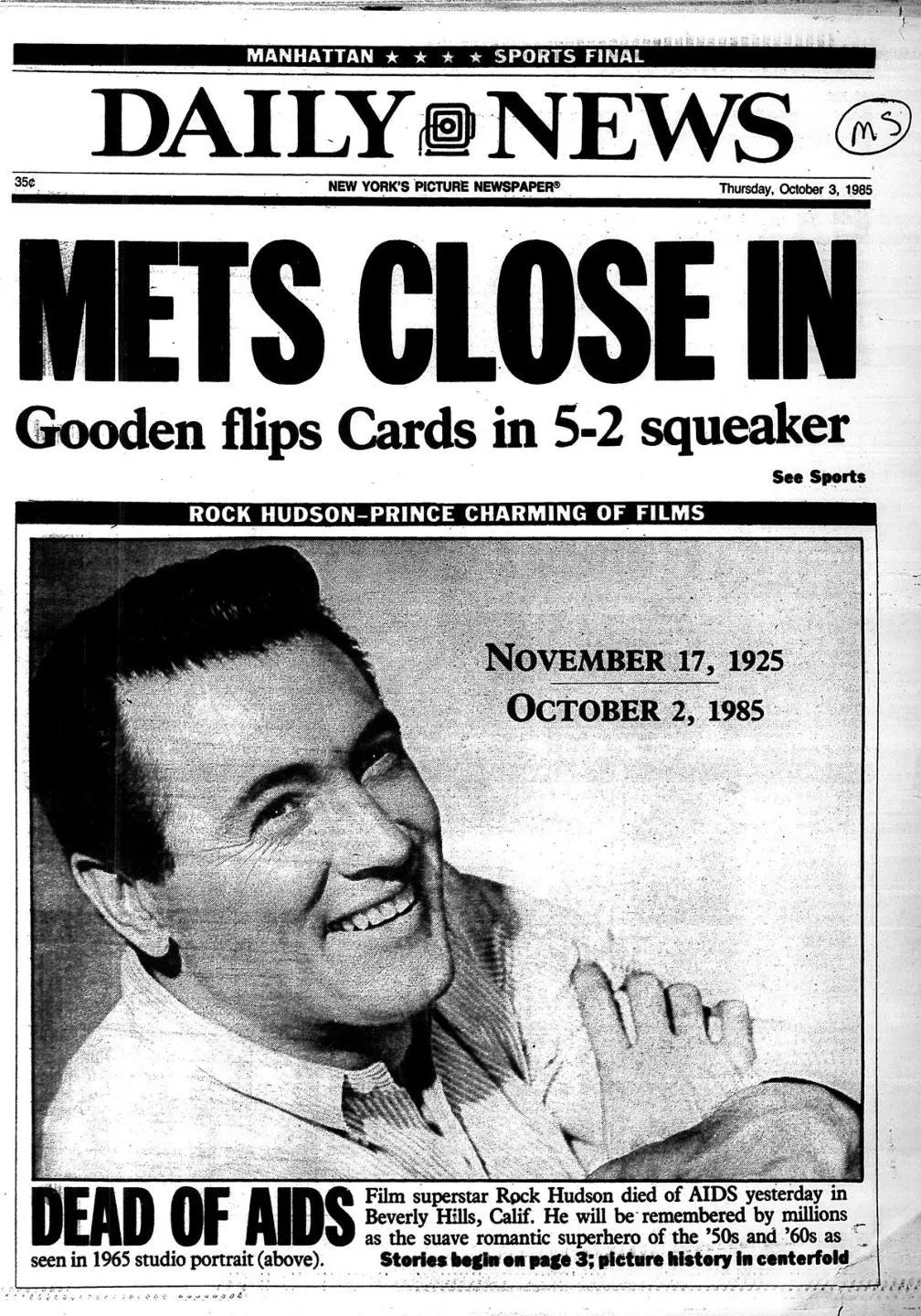
What changed everything for many other heterosexuals was Rock Hudson’s death. To many baby-boom-era Americans, myself among them, the Hudson-Doris Day comedies were a formative initiation into heterosexuality. Ken and Barbie dolls these two screen lovers were, yet their teasing games—the longest route imaginable into the sack—were erotic stimulants, perhaps because so much was left to the imagination and gratification was so delayed. The stars’ manicured looks were the ideals against which we expected to be judged and, inevitably, found wanting.
For many, it was a shock to discover that Hudson, the rock of so many heterosexual myths as late as 1984 episodes of Dynasty, was gay. For me, it was even more of a shock to see pictures revealing the depleted condition in which AIDS had left him: the ravaged, skeletal figure that appeared in photographs just before his final seclusion had an emblematic aura, as if Hudson’s image of manliness (and, by implication, every man’s?) had to be obliterated before our eyes in some mean Puritan ritual out of Nathaniel Hawthorne. The audience that loved Hudson—even though they loved him for what he represented rather than for what he was or for his modest talents as an actor—couldn’t stop loving him when he was unmasked. The humiliation and lack of dignity that attended his death made for a pitiful spectacle.
The story of AIDS has, cruelly, just begun to be written. It has arrested the homosexualization of American culture—it has arrested lives and much else in our society, freezing everything in place and in midair, like the lava that descended on Pompeii. Movies like Top Gun are likely to go the way of the fashions that spawned them. The bisexual love triangles of Dynasty and perfume ads now prompt thoughts of blood tests, not erotic fantasies. It’s a small yet paradigmatic sign of the times that the first hit Broadway musical about male lovers and transvestite performers, La Cage aux Folles, switched its ad campaign to highlight photographs of its long-legged all-female chorus dancers.
Before AIDS, out-of-the-closet homosexuality, like heterosexuality, undoubtedly contributed its own share of trivia, vulgarity, and smugness to the American cultural mix, but would any sensible person want to revert to the way things were? Snap in the videocassette of the first Rock Hudson–Doris Day hit, the 1959 Pillow Talk. In one crucial scene, for farcical reasons not worth relating, Hudson was required to trick Day into believing he was homosexual. The word homosexual—let alone gay—was not mentioned. We were simply told that Hudson’s character was one of those “men who are very devoted to their mothers—you know, the type that likes to collect cooking recipes, exchange bits of gossip.” The “you know” alone in that sentence speaks of decades of nasty gossip, innuendos, demeaning caricatures.
Given what we do know now, it’s instructive to see how poorly Hudson impersonates this “type” of man. He raises a pinky finger and slightly slurs his character’s southern accent—hardly a performance to compete with those in The Boys in the Band. Yet Hudson was completely convincing as a heterosexual playboy, from Pillow Talk to Dynasty. Does Hudson’s skill at playing a heterosexual mean that he was a brilliant actor, or was this just the way he really was, without acting at all? I suspect that most Americans believed that Hudson, who seemed so natural on screen, was playing himself, which means that in the summer of 1985 we had to accept the fact that many of our fundamental, conventional images of heterosexuality were instilled in us (and not for the first time) by a homosexual. But the subterfuge of Pillow Talk (and so many films like it) went deeper still. Everything that happened on screen was a lie, with the real content embedded in code. Not only was a homosexual impersonating a heterosexual but the “heterosexual” was in turn caricaturing a “homosexual”—and to what ends? Mainly, to reinforce sexual stereotypes and to humiliate a woman. From this morass of bigotry, crossed signals, and hidden motives were men and women expected to learn “pillow talk”—the etiquette of love and sex. Is it any wonder that Americans who came of age in the 1950s were so mixed up?
Now we live in more enlightened times, of course, and there are very few loves that dare not speak their name: to distinguish between safe and unsafe sex, all forms of lovemaking must be discussed, endlessly, by everyone, and at an early age. But if homosexuality as a social and biological phenomenon has entered the mainstream of American life, it’s far from clear in the AIDS era to what extent heterosexuals embrace actual homosexuals—or the other way around. It’s the nature of the melting pot that Americans can absorb black music or Jewish literature or gay aesthetics even as they keep their distance from the blacks, the Jews, and the gays themselves—especially if these minority groups are too poor or assertive or ill.
Not long ago I found myself in a business meeting with a man whom I’d not previously met. Once the business was out of the way, we started talking, as everyone in New York does, about the plague, its latest medical and sociological ramifications. We talked about gay friends we each knew who were sick or had died. We talked about straight friends who were frightened. We agreed about most issues in the AIDS debate, got along famously, and did not talk about our own sex lives.
When the conversation ended, we left the restaurant through a revolving door, and just as we spun through it, the man turned to me and said, as a hurried and embarrassed parenthesis in an unrelated sentence, “I’m gay, by the way.” By the time this surprise revelation registered—and I had never even asked myself if the man was gay—he was off to another thought, and not long after that, we had gone our separate ways.
Later, as I thought about this encounter, I realized how much and how little had changed in the two decades since my friends and I had shunned a gay roommate—and our roommate, in turn, had kept his secret from us. At our business drink, the gay man and I had talked, with a candor unimaginable when I was his age, about everything pertaining to the practice and culture of homosexuality, and then he had confessed his own homosexuality to me, a stranger, with a casual openness equally unimaginable in another time. But as I was touched by his honesty, I also was struck by how late his confession came in our conversation. Had our whole discussion about AIDS been a test to see if I was either homophobic or homosexual? If I were homosexual, would the entire conversation have changed course, tone, argot? If I had proven homophobic, would he have still revealed his sexual identity (and told me off), or would he have lied about it, out of self-protection? And how would I have behaved if he had begun our meeting instead of ending it by saying he was gay? Might I have then censored myself, to make sure that I didn’t say anything that might have sounded remotely bigoted? Might I have assured him that some of my best friends are homosexual? Might I have monitored his behavior more closely, to see if he fit the stereotypes, however discredited, of The Boys in the Band? Might I have feared that he was contaminated by AIDS?
For all that has happened in the past twenty years, this social transaction with a gay man of 1987 had nearly as many ellipses as my encounters with my transitory college roommate before the homosexualization of America began. Though our conversation about AIDS and homosexuality had not been bowdlerized, it was not genuinely intimate. I suspect that the blanks in our dialogue are found in many present-day exchanges between heterosexuals and homosexuals, and that the panic generated by the plague is likely to widen, not close, the gap.
The thing is, I really wanted to talk to this man, in the interest of friendship and also to hear his side of all that had happened in our culture over these years. Whether he wanted my friendship—or to hear my side—I couldn’t say. At the very least we could be certain of meeting again at those memorial services that are proliferating in New York right now. There we would exchange guarded hellos while saying goodbye to beloved mutual friends that, in the grievous end, perhaps only one of us had truly known.