Marlon Brando: Revision
"Marlon believes fervently in things and then Marlon abruptly changes his mind."

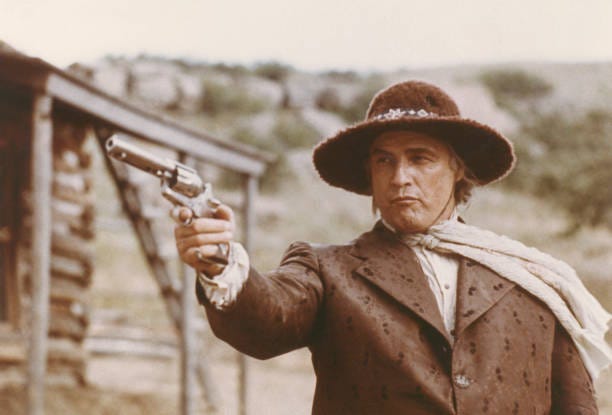
When Marlon Brando and I began talking—always late at night—in 1990, I was working as a copy editor at Penthouse magazine. In order to check facts, we used Lexis and Nexus, and I could look up data from thousands of sources. It seemed a marvel. Now, it is what we do constantly on our desktops and phones, using Google. I would also use Lexis to look up information on Marlon Brando, so that I could talk to him about his work and his life.
There were many arguments.
For instance, I read this to him one evening:
I want to relate personally, but it's hard. First, I don't relate to anyone professionally, actor or writer or whatever. I like to try to draw out a particular human experience and re‐examine it. This way, I may incrementally alter some aspect of understanding of myself. I have this marvelously retentive memory for detail, things are implanted in my brain. I'll remember the way you were dressed, the color of your shirt.
But basically I’m interested in seeing how fundamentally we are all the same and yet fundamentally we are all different. If there is a common denominator that can be usefully marked and employed and simulated, then that’s what I’m trying to find — some common ground to lead us to a solution to what seems to be a situation without a solution.
You know, I don’t mind what people think about me; they can write whatever they want. I’ve been devotedly indifferent, I don’t even bother suing them. Some people are a miracle of insensitivity. Personally, I’m not interested in making an assessment of myself and stripping myself for the general public to view. We put to sleep our notions about ourselves that are real and dream others. We live in this dream called America and it’s an America that excludes a large number of people—blacks, Chicanos, Micronesians, Samoans, Jews to a large extent. I’m dedicated now; I feel an obligation to disabuse the American public of the notion that history is as we read it in our textbooks or see it in our films. Hollywood has been singularly and forcefully destructive to the positive self‐image of minorities and, with the exception of individuals like Stanley Kramer or Robert Redford, few are trying to right the wrongs.
Marlon let me finish reading the quotes, and then said: “I never said any of that. Where did you find that?”
I told him it was from the New York Times (“Oh, God, them!” he said) and was written by Jim Watters, and appeared in the September 21, 1975 edition. The interview was conducted on the set of the film The Missouri Breaks.
“I have no memory of that interview,” Brando told me. “I am leery of it. Some of it sounds like me, but some of it doesn’t. I have never seen that.”
I had printed the material out—just a dot-matrix series of pages—and mailed it to him. Brando still doubted it.
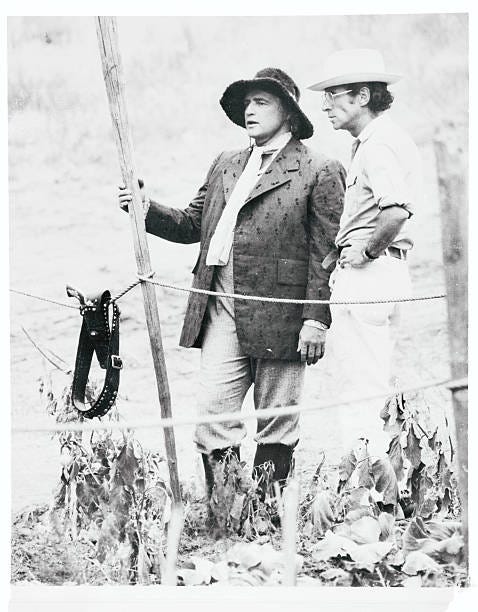
Years later I was able to talk to Arthur Penn and Patricia Bosworth and Peter Manso about Marlon Brando, and they confirmed that the actor often revised or rejected things he told to reporters, friends, colleagues.
“Marlon believes fervently in things and then Marlon abruptly changes his mind,” Arthur Penn told me. “I got used to it. I felt it was indicative of his anxious, creative mind. If he read something or was told something, and if it moved or inspired or enraged him, he would alter twenty things he might have told you just a few days before. I think we all change our minds, but few did it with the fervor Marlon did.”
Patricia Bosworth recalled every telephone call or in-person meeting with Brando as flirtatious and prosecutorial. He wanted facts, dates. He wanted the demeanor of the person who conducted the interview, an impossibility for the writer who has pulled information from microfilm or the stacks of a library. “Well, then,” Brando would tell Bosworth, “it can’t be trusted.”
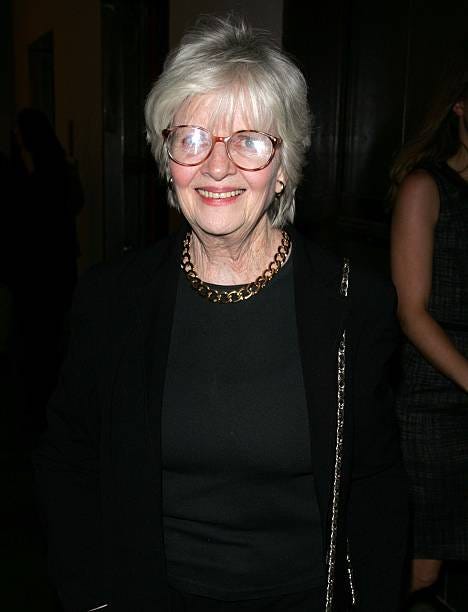
“I think he had been burned a lot by the press,” Bosworth told me, “and he saw me—and he saw you—as a part of the press, even though we were writing or researching things that weren’t ‘yellow,’ as he liked to call them. There was the distrust, but there was also the fact that he was embarrassed by things he had said, things he had believed. His disgust at the ‘industry,’ that multi-tentacled thing or things for which he worked, was borne out of his acceptance of that industry, his dependence on it. He hated the process and the people who had made him rich, pushed him in front of cameras. I don’t think he could manage—brilliant as he was—to believe that the industry had its faults, and it was good to point those out and try to fix them, and to acknowledge those times when he played the games they asked him to. The industry—whatever that may be—made him Marlon Brando. People change, and no one changed more than Brando, but I find it amusing that when he talked to me—when he talked to Peter [Manso]—he spoke of the American dream, of our sleep-walking, of his gift for detail, of his looking for what is similar and alien in all of us. Look, that piece did appear in the Times, and it was not a piece of fiction or a conspiracy. What is really going on is that Marlon was not happy with that film [The Missouri Breaks] or he had changed his mind on certain things, so it was his wont to deny it had ever happened or deny that he had said it. He was a fascinating, complex man, and it was like trying to sculpt with mercury in talking to him. He would and he could change before your eyes.”