Daniel Talbott: Sweet, Scared, Sacred
"Show up and show out, and let’s make a fucking shit ton of movies in 2026 and beyond."

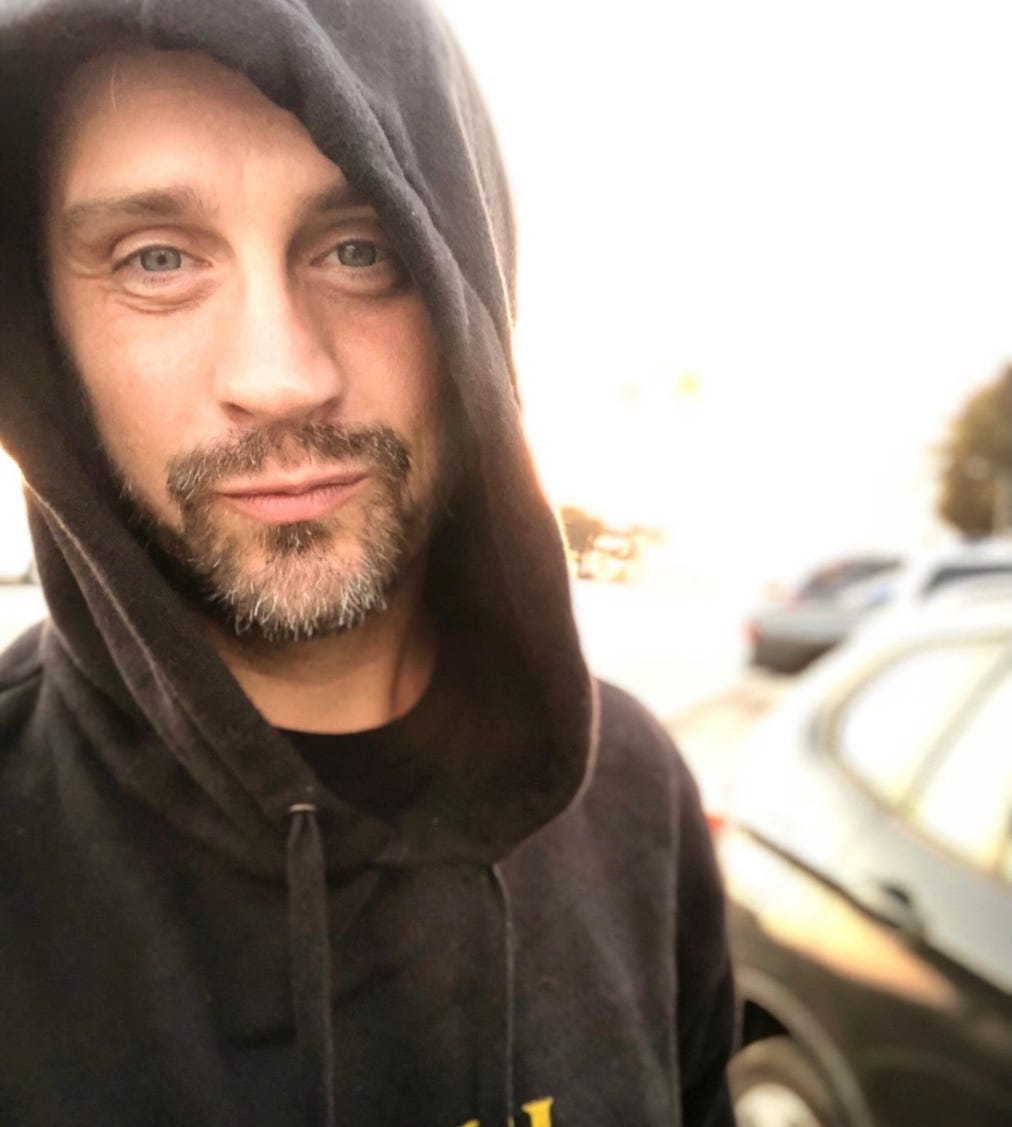
How long has it been since I first heard of Daniel Talbott? Can it be sixteen years? More? People I admired spoke of him reverently, sweetly: He was going to change things.
Then, I met him, and he changed me. Oh, the things we talked about! I’ll share them some day. Daniel is a beacon, beautiful of mien and spirit, energy and joy radiating from him. I have followed him in the theatre, in television, in film, and through his posts online of his adventures. Telling other people about Daniel is a joy—and a complicated procedure. There is so much to him and about him, so to cut through the clutter, I went right to the man.
Here is the press release:
Daniel Talbott, a filmmaker with credits including Midday Black Midnight Blue and the upcoming Welcome to Tool Shed, has formed Orphan Andy Films, a new film and television production company focused on queer voices that takes its name from the iconic diner in San Francisco’s Castro district.
“Our community is under renewed attack in the U.S., and that has made me want to be more visible, vocal, radical, and out there in both film and television,” Talbott told Deadline of the impetus in launching his company. “And, most importantly, I want to help other queer filmmakers from every background and corner of the world make their films and tell their stories.”
Current films on Orphan Andy’s slate include the documentary Welcome to Tool Shed about an iconic Palm Springs leather bar; The World’s Coming in Fast, an experimental narrative/doc hybrid feature about San Francisco as a historical home for queer joy; the half-hour episodic drama Born Again, about a group of friends reeling from the death of a loved one; and the short film Parking.
The company aims to focus on rural, working-class, and global queer stories and will partner with other producers and companies.
“My work is heavily influenced by queercore filmmaking by filmmakers like Gus Van Sant, Cheryl Dunye, Gregg Araki, Chantal Akerman, Jennie Livingston, Todd Haynes, Lucio Castro, Derek Jarman, Lizzie Borden, and Agnès Varda,” Talbott said, “all filmmakers who have made and told queer stories with and without support and financing, in a singular and brilliant way.”
Here is the man, in his words:
The first time I fell in love with a boy.
The first time a boy kissed me and meant it. We were in a shitty cabin in the woods with a fucked-up roof, listening to Guns N’ Roses’ Patience. He was older and taller than me. He had crazy curly hair and fucked-up, blistered hands from chopping wood with his dad and cousins. We didn’t say shit. We didn’t need to. He kissed me again, touched my face, kissed me, and went to get more beer from the other room. The music had bled into You’re Crazy. I sat on the bed hoping he’d dig up his dad’s shotgun, come back in, and put me down like a cancer-sick horse. That he’d spare me. A few years later, he returned to that cabin and put himself down in the same room where he’d kissed me. No note, nobody. He was gone.
I knew I wanted to be a theater freak and filmmaker. I knew I wanted to be a queer filmmaker and to help other filmmakers produce, create, and get their films made and out into the world. I wanted my community to see themselves in film, on the screen, so that they knew they were part of something so much larger and older than themselves—so they knew they were loved and that their stories and lives mattered.
I’ve dedicated my life to making and producing theatre, TV, and film, especially queer stories.
People come to Hollywood for so many different reasons, and through their actions and storytelling, through their films, they show themselves. My true friends always remind me that Hollywood was created by radical, punk, guerilla-style immigrants to escape Thomas Edison and his dog-eat-dog bullshit. They also remind me that you get the same thing with generosity, heart, hard work, honesty, and by sharing resources as you do with false humility, ladder-climbing, back-sliding, fame-starved bullshit.
There are many ways to make films. Building community and showing up and showing out for your folks is the way. It really is. You don’t lose anything by coming together, being loyal, and looking out for each other and not just yourself. You work with love and integrity. I live by all of that as hard and true and feral as I can.
The sharks in the room always seem so unhappy and lonely. And from what I’ve seen, their work betrays that sad loneliness in its shallowness and lack of scope and authenticity.
If you make films, you’re a filmmaker. The act of making a fucking film is sublime, extraordinary, difficult, Herculean, and brilliant. You may never have the career that your heroes have; you’re probably not going to win an Oscar; but if you’re doing the work...if you’re finishing the tenth draft of your screenplay at three a.m....if you’re innovatively making and editing that fucking film on your iPhone about your grandma’s secret love affair with a woman when she was sixteen—you’re a filmmaker. There is too much bullshit about class and fame and success in our culture. I’ve seen and heard and witnessed way too many times people turning their backs on someone they didn’t feel was successful enough, or cool enough, or good enough to breathe their fucking air. I’ve been at parties where literally everyone is sizing up the room to see who is worthy and who isn’t; who’s been in Deadline recently and who’s had a so-called failure. The most interesting story never lives with these people. It is always lonely in the corner, unable to find words. Play that game at your own peril.
The work is all we can control and show up for. We make films that some people love, some hate, some could give a fuck less about. Some that get distributed, some that die in VOD. Make films anyway. We’re going to need those films in the next four years. Produce them, crew them, provide craft for them, shoot them, edit them, finance them, light them, pull focus on them and Go and see them in a fucking movie theater when you can. Make them from the nastiest, most vulnerable, raw, scared, sacred parts of yourself. Do the research and listen. I say this as a queer filmmaker. A proud queer filmmaker. Show up and show out, and let’s make a fucking shit ton of movies in 2026 and beyond.
All of the above is me as a producer and filmmaker. In a nutshell. I wanted to write something from the heart and the blood for this. I wanted to let you know where I come from as an out-and-proud filmmaker.